Case and Prosecution Workflow
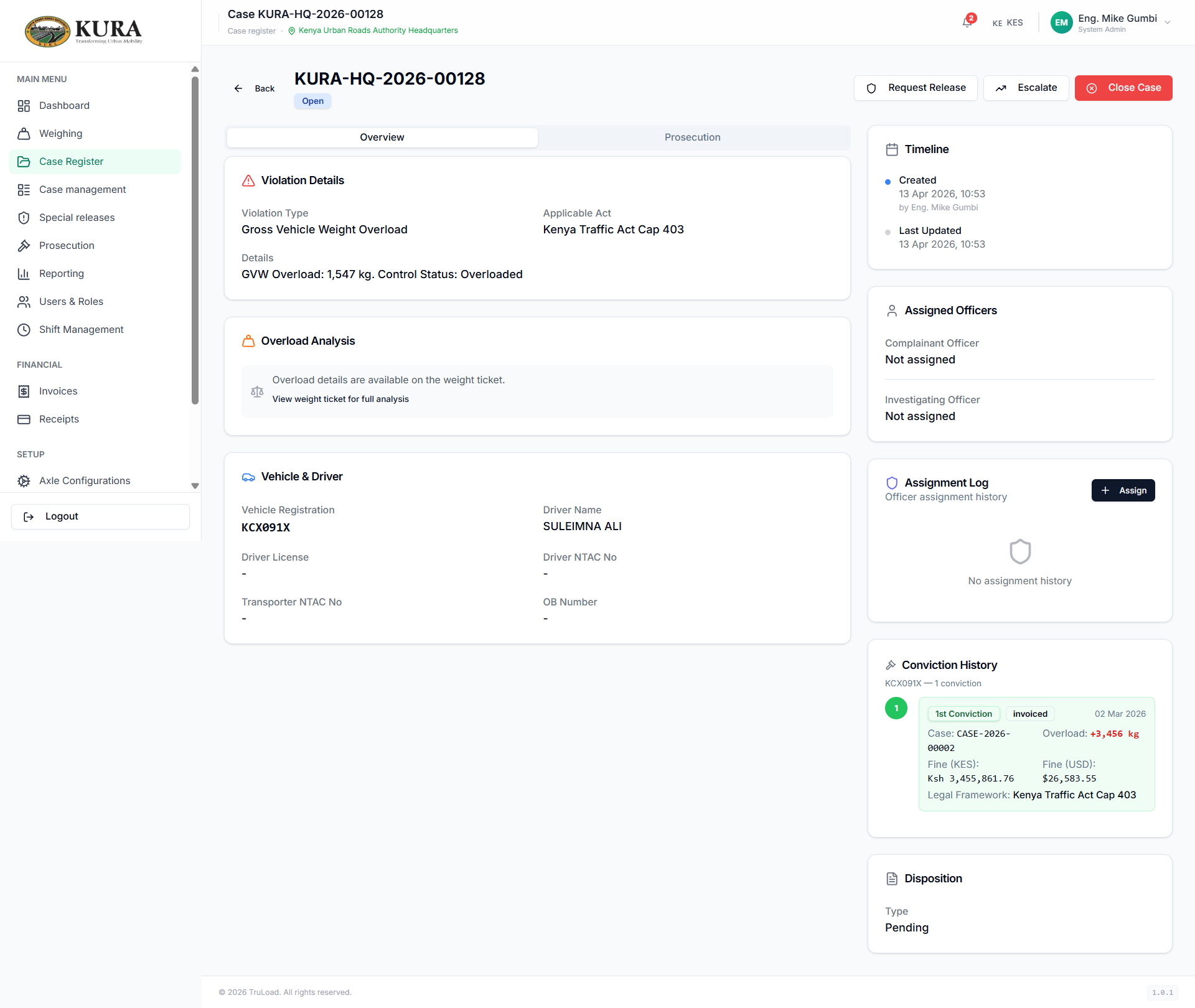
Case register workflow
- Open
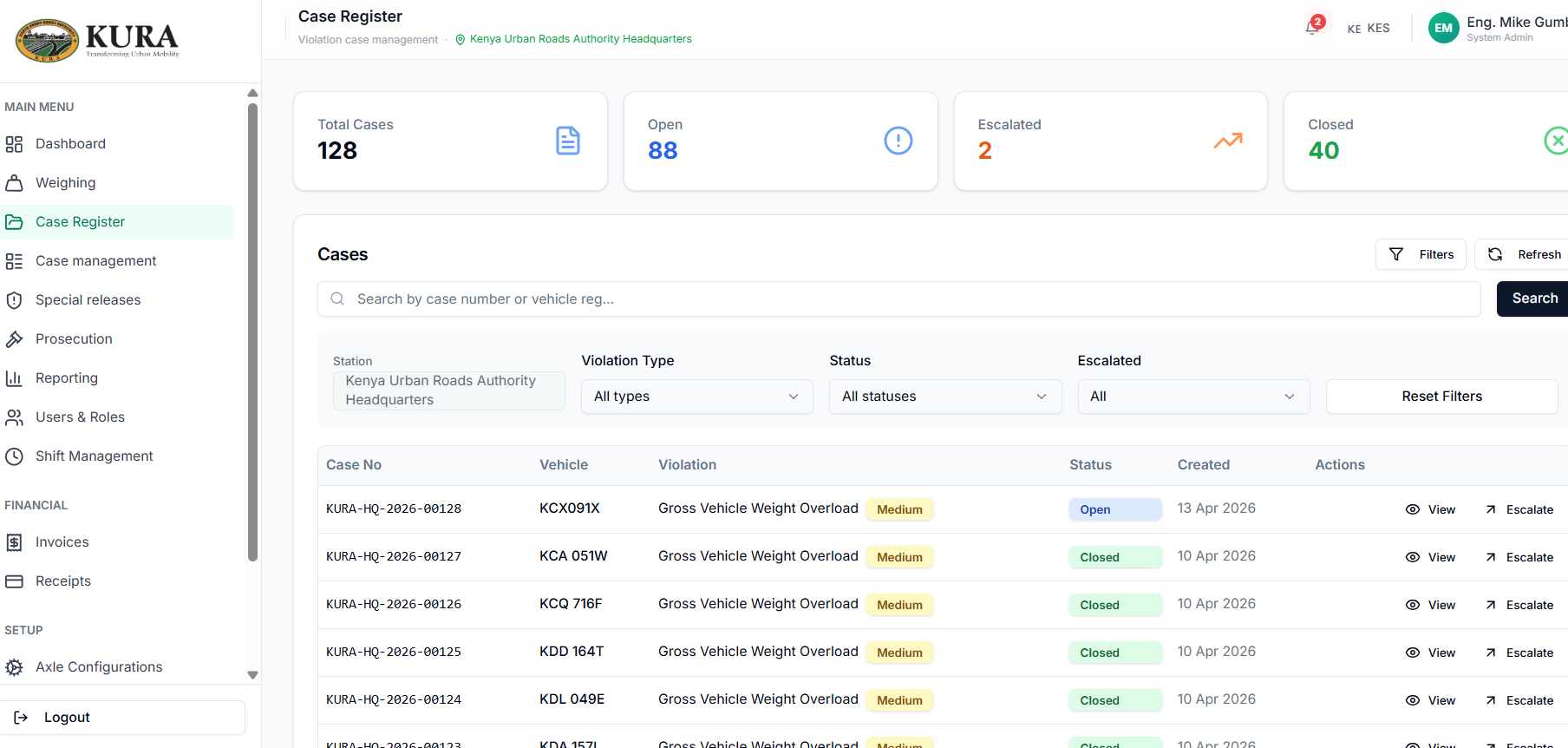
Case Register. - Search using either:
- General search — matches weighing reference or case number
- Vehicle Reg field — dedicated plate-number search; space-normalised so
KCX091XandKCX 091Xreturn the same results - Open the case details panel and review:
- violation context
- legal references
- vehicle and operator details
- yard/hold linkage
- Add/update notes.
- Choose next action:
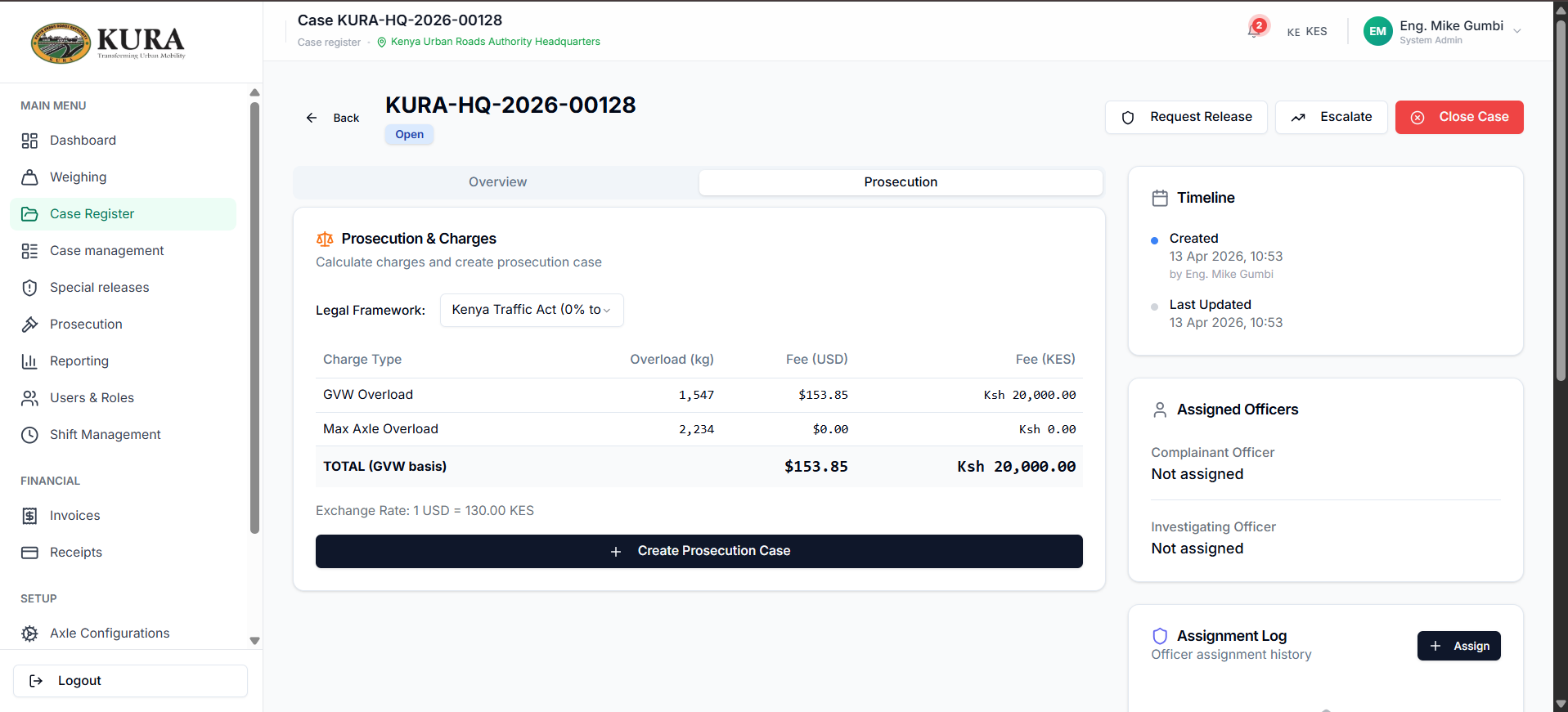
- escalate to prosecution
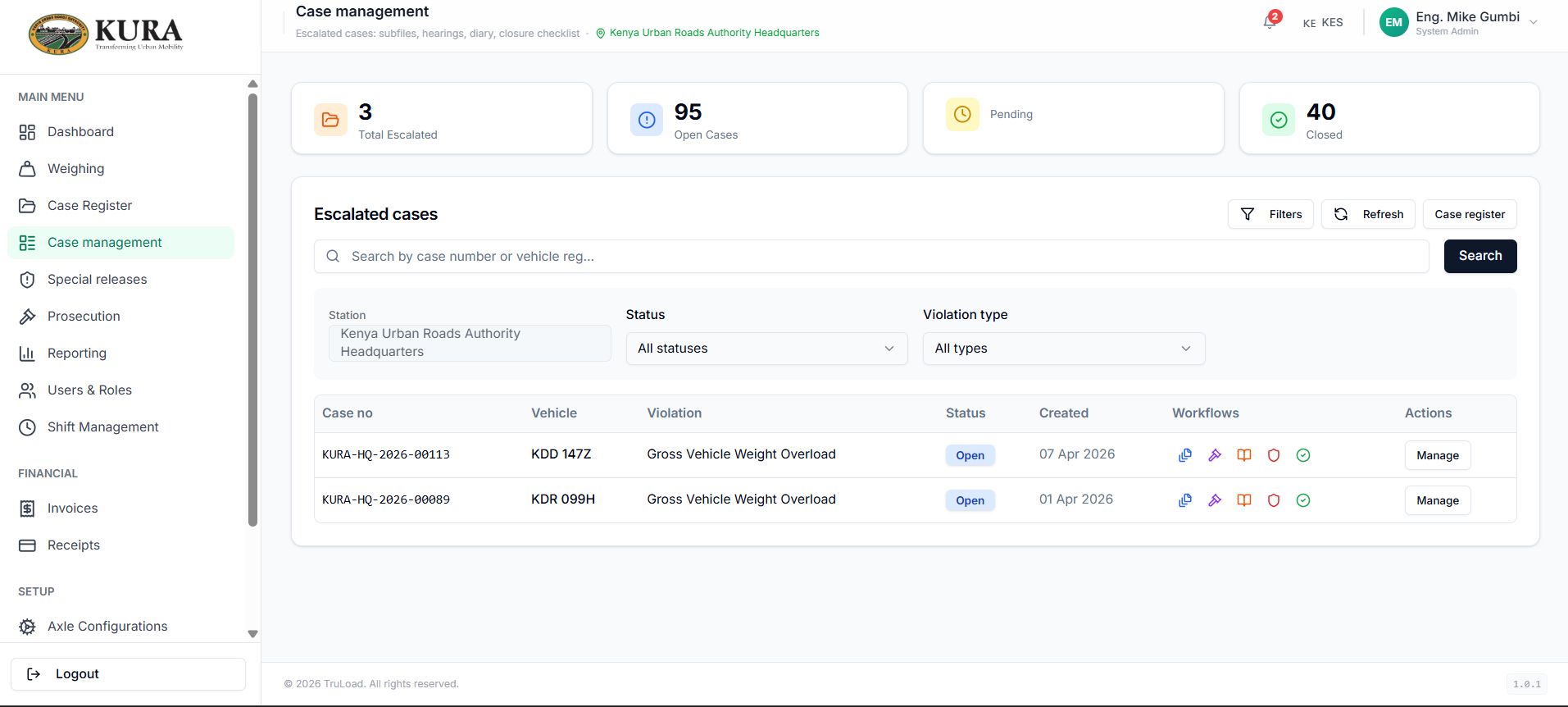
- escalate to case management
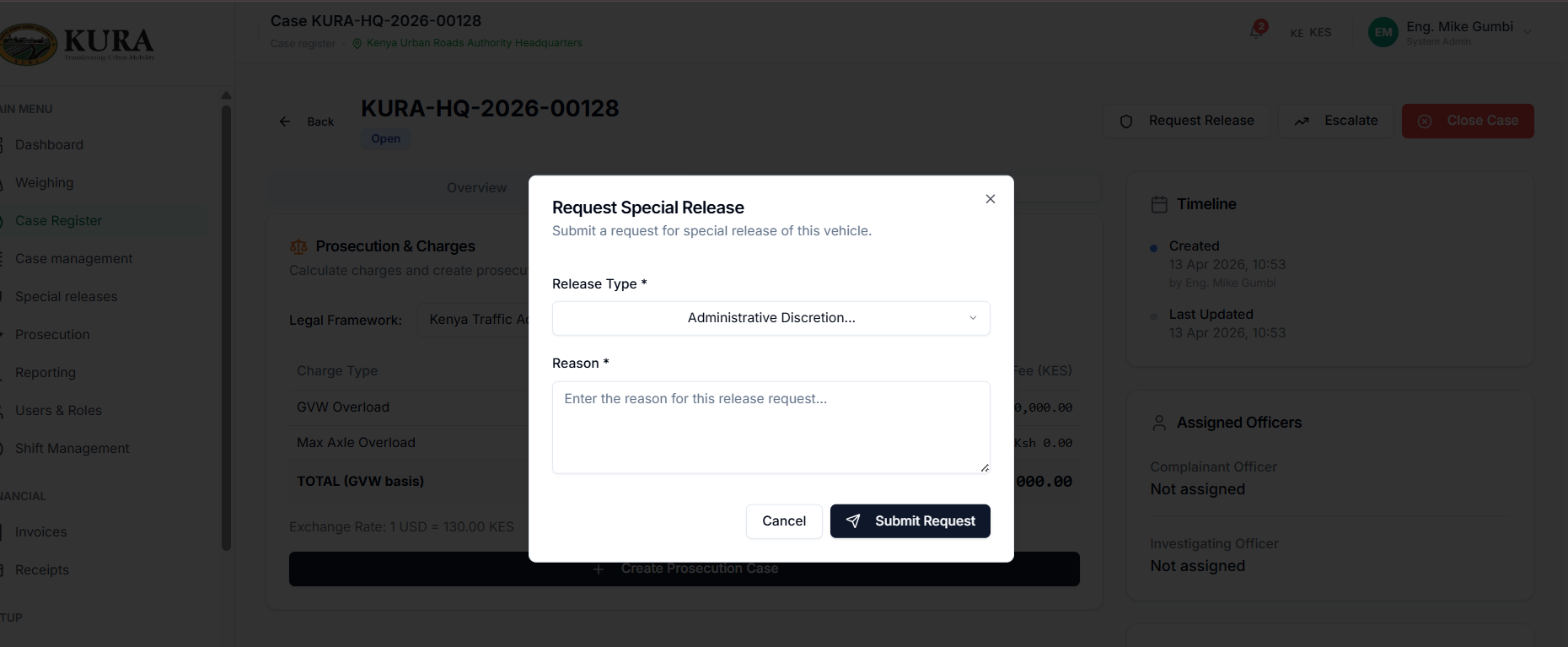
- request special release
Case management (court/escalation lifecycle)
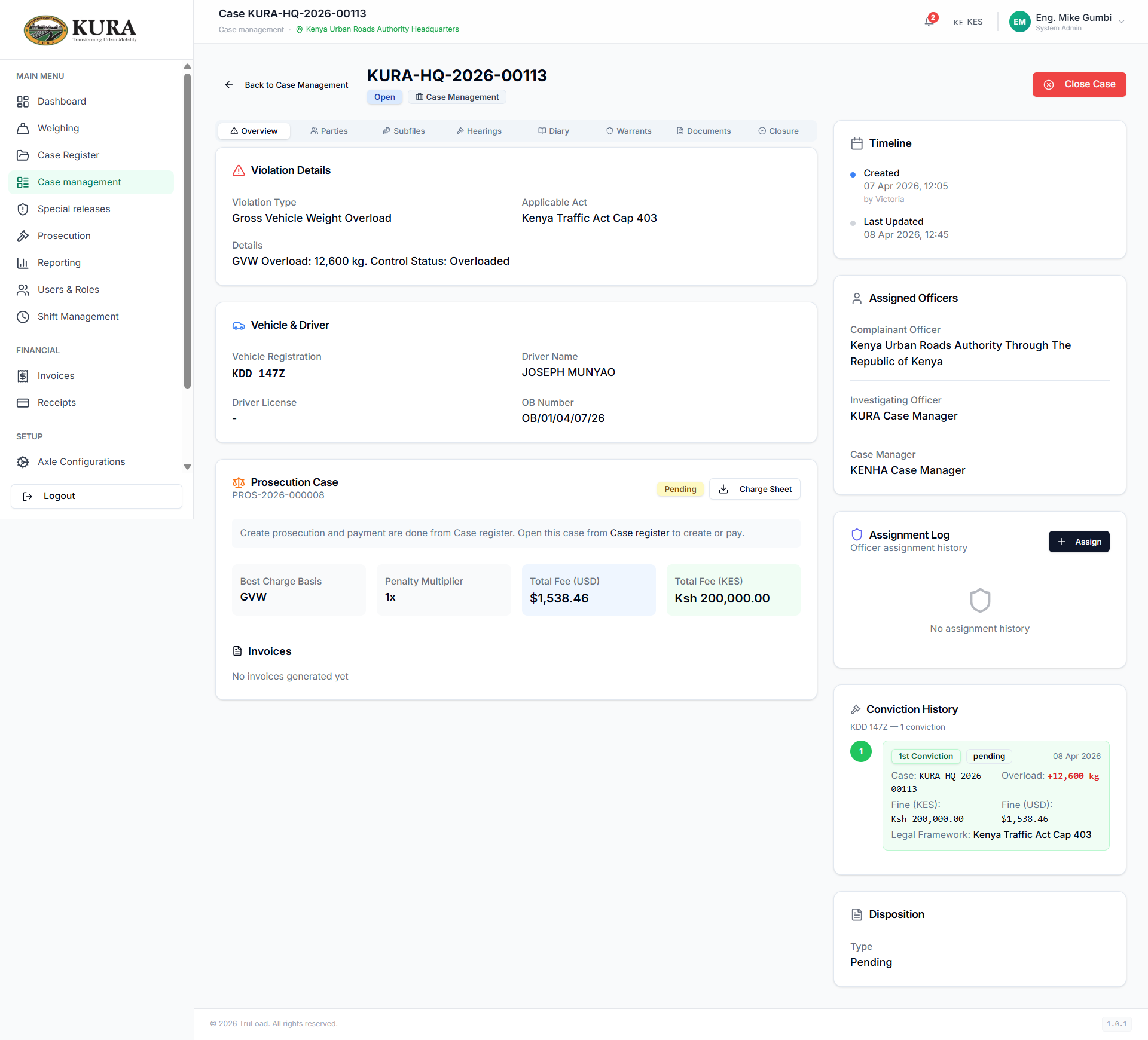
- Open
Case Management. - Open target case from queue.
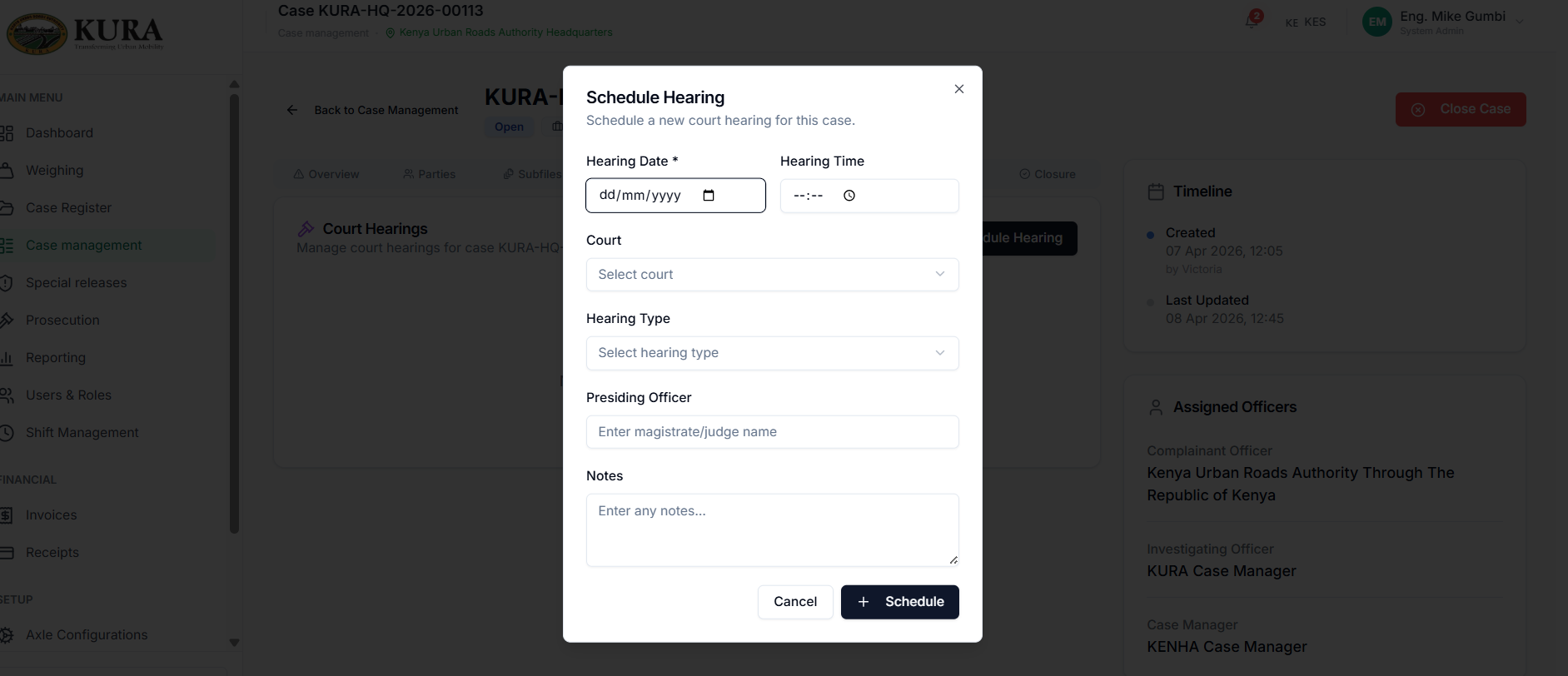
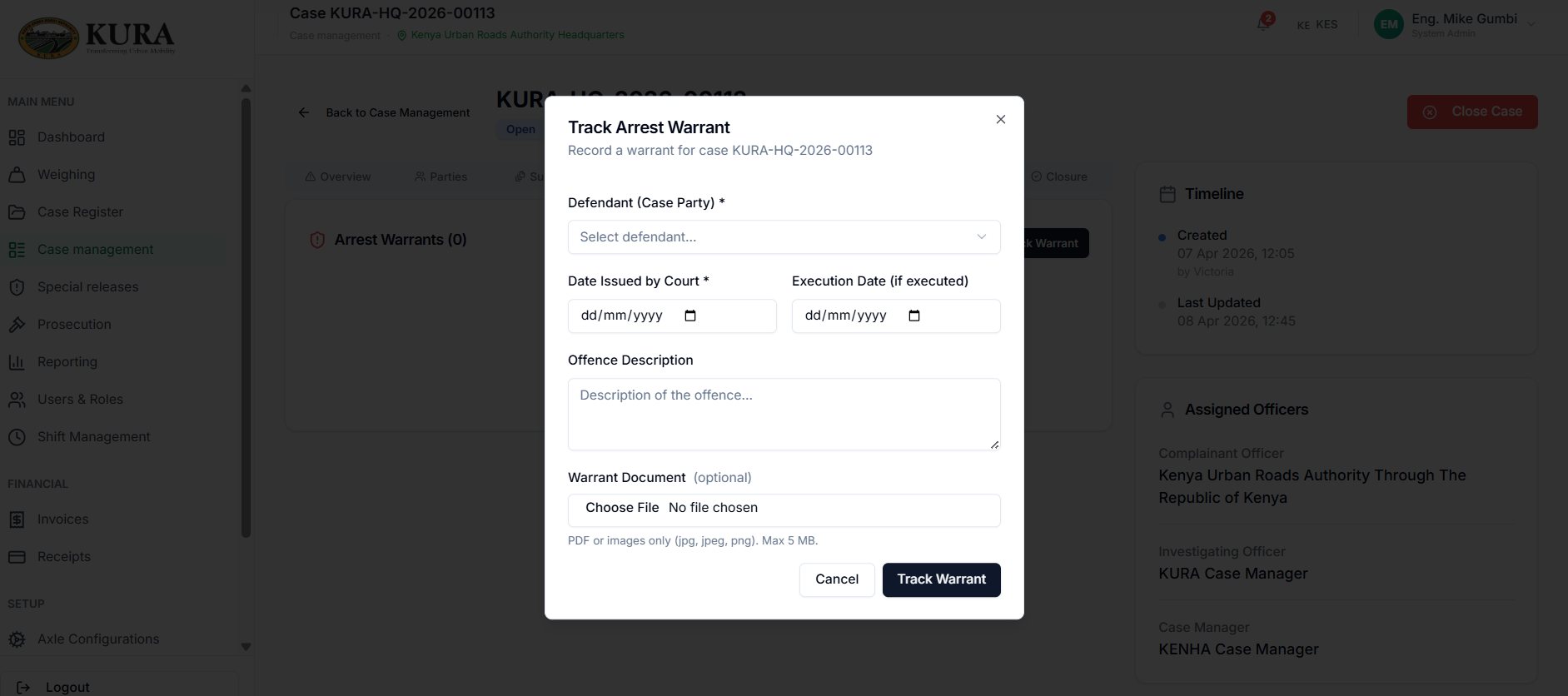
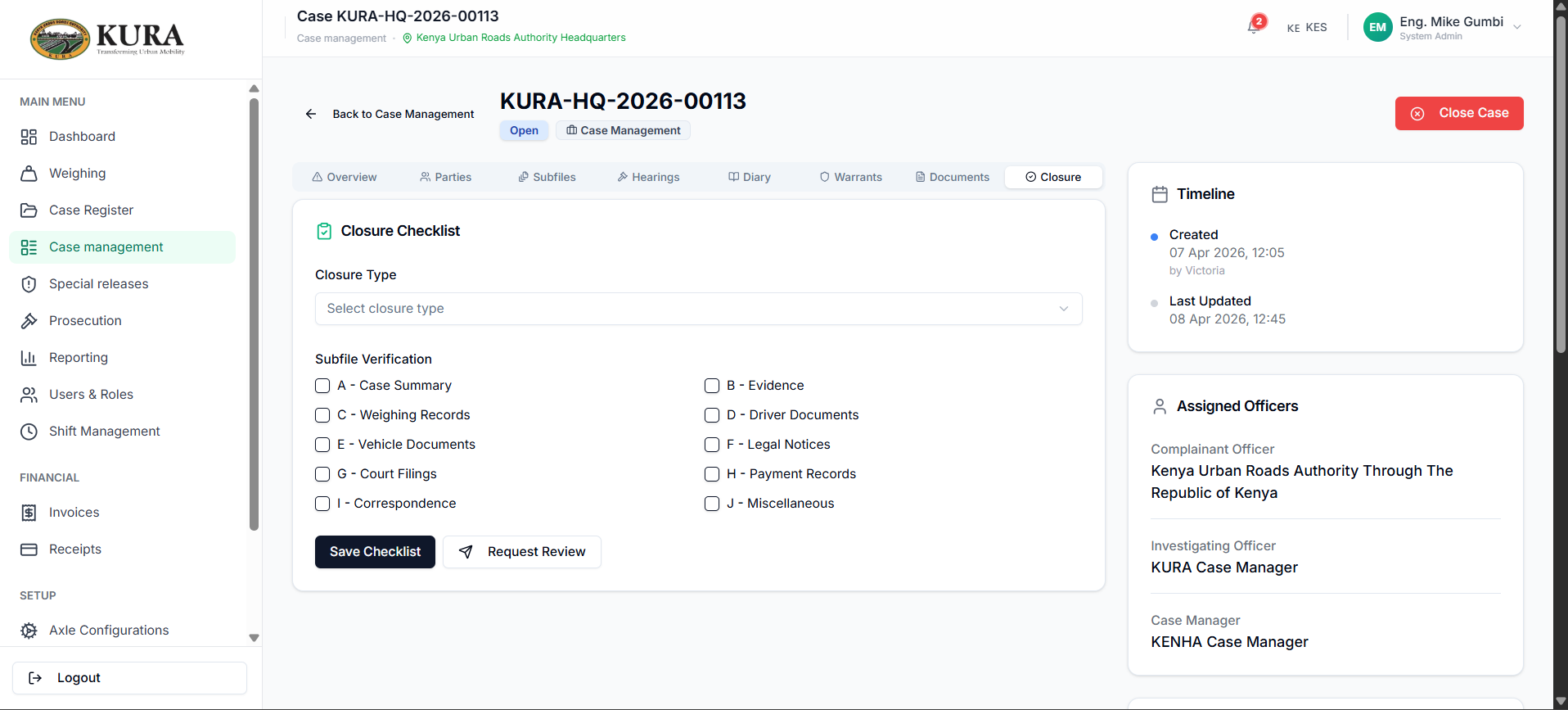
- Manage legal workflow in sequence:
- assign parties
- manage subfiles
- schedule hearings
- attach documents
- track warrants
- complete closure checklist
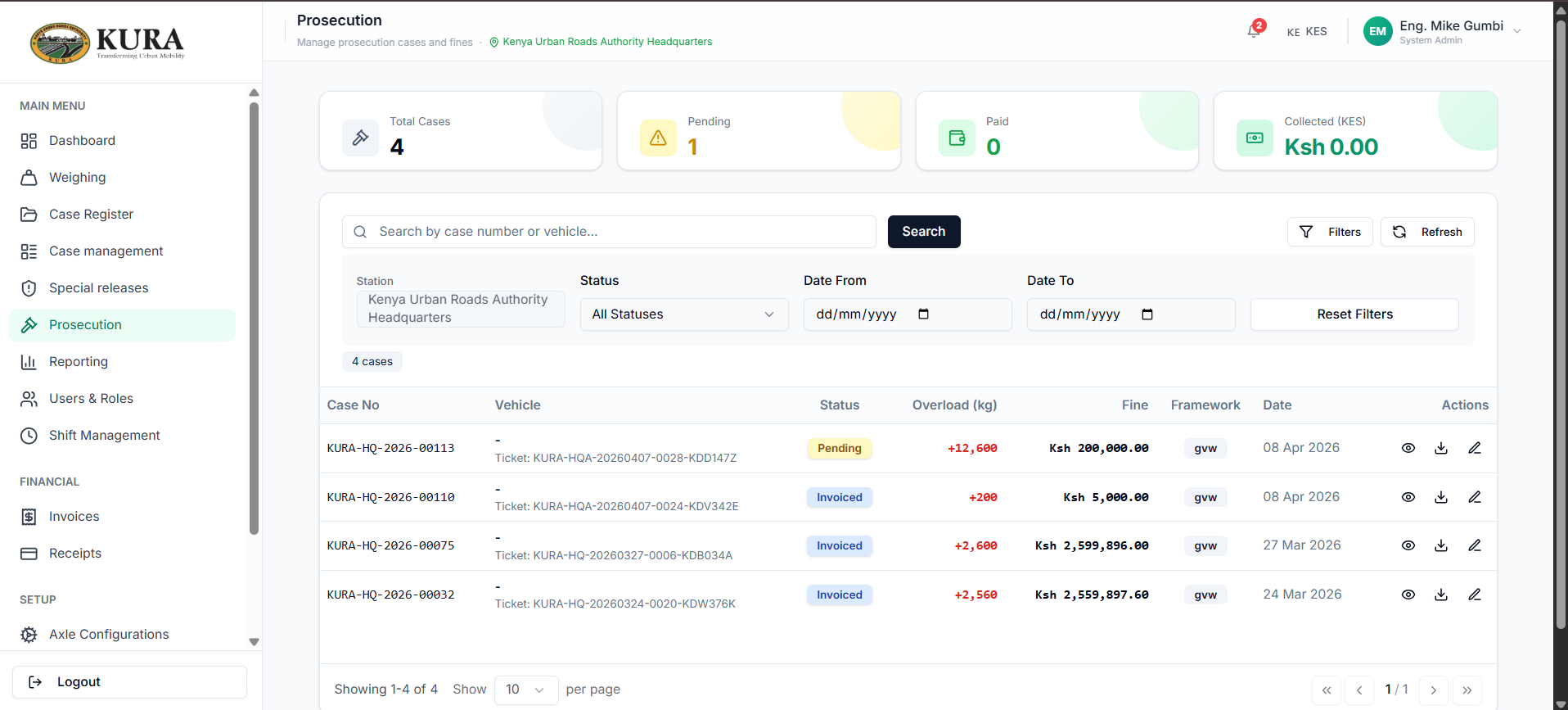
Prosecution and invoicing workflow
- Open
Prosecution. - Open prosecution item for the selected case.
- Validate charges and legal basis.
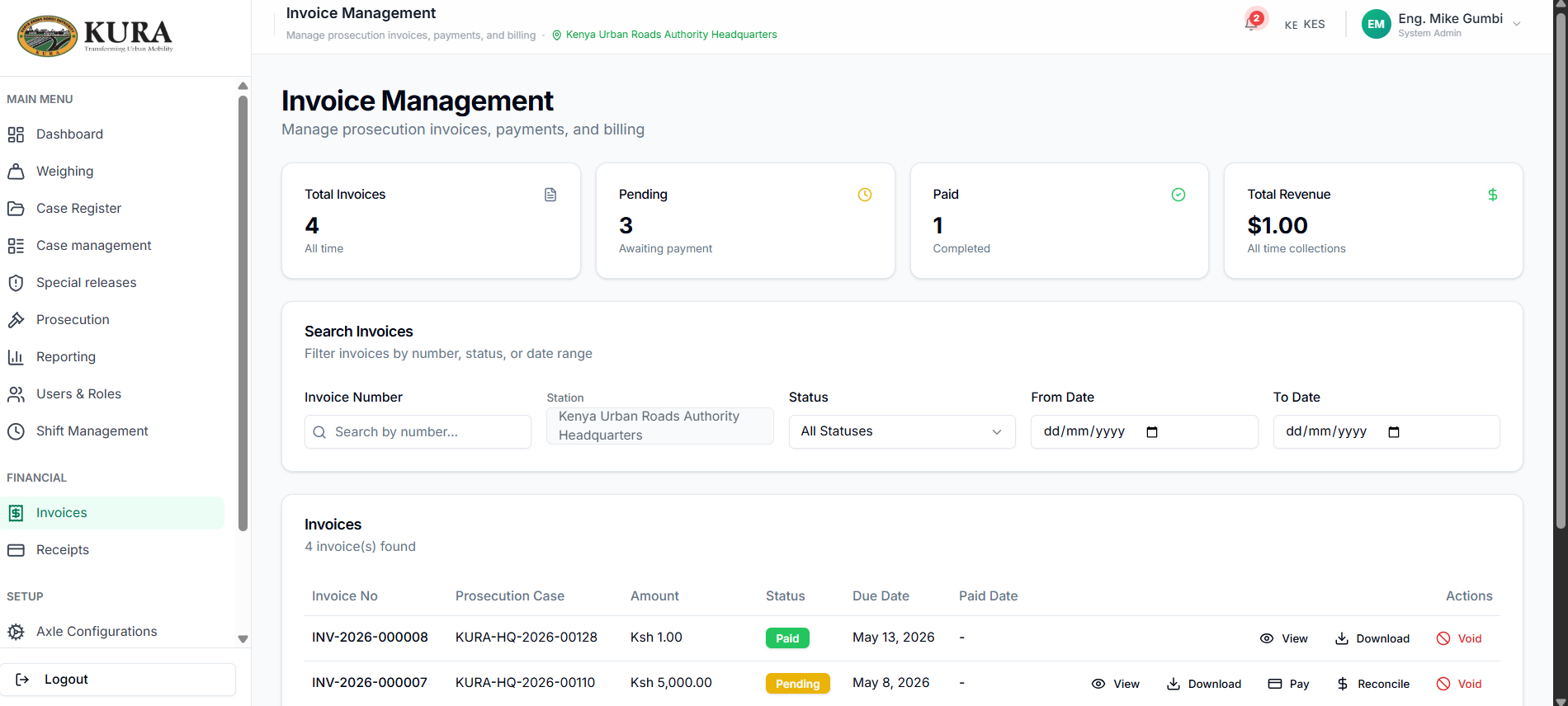
- Generate invoice.
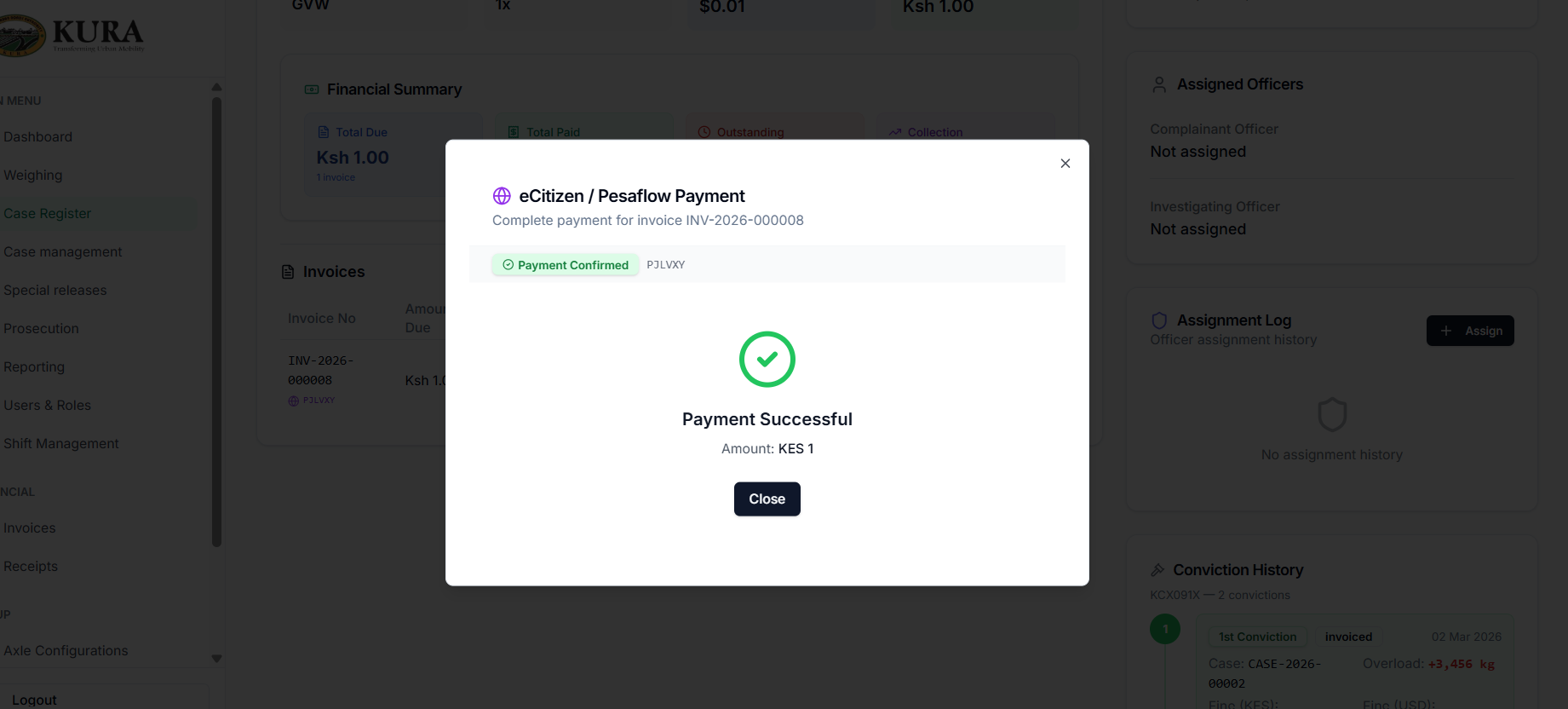
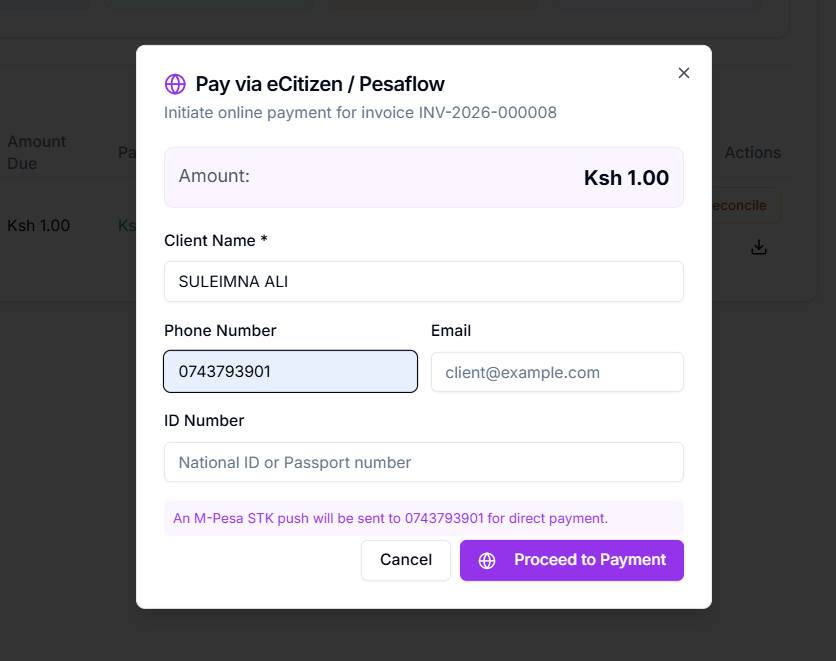
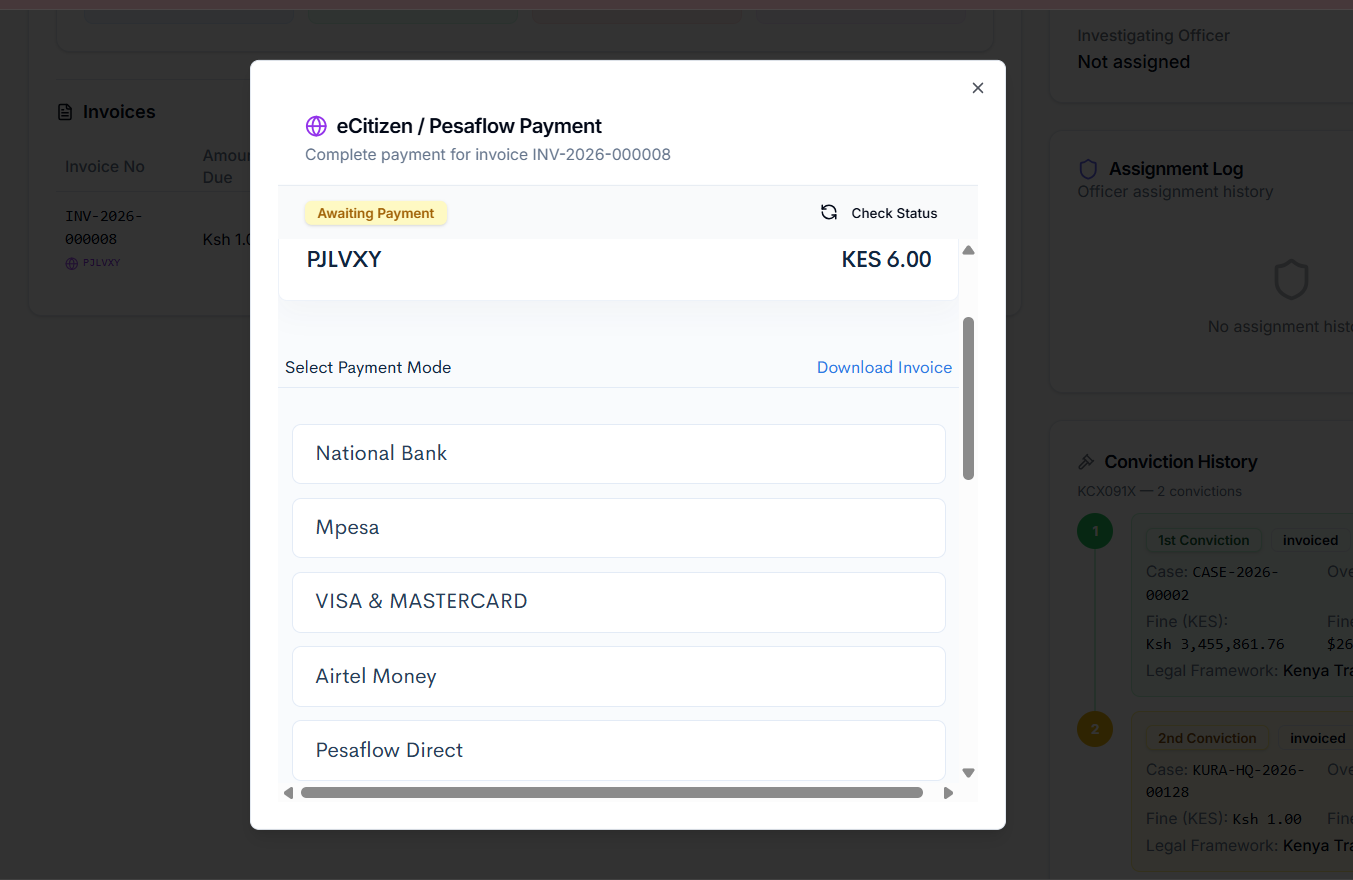
- Initiate settlement via available payment channel.
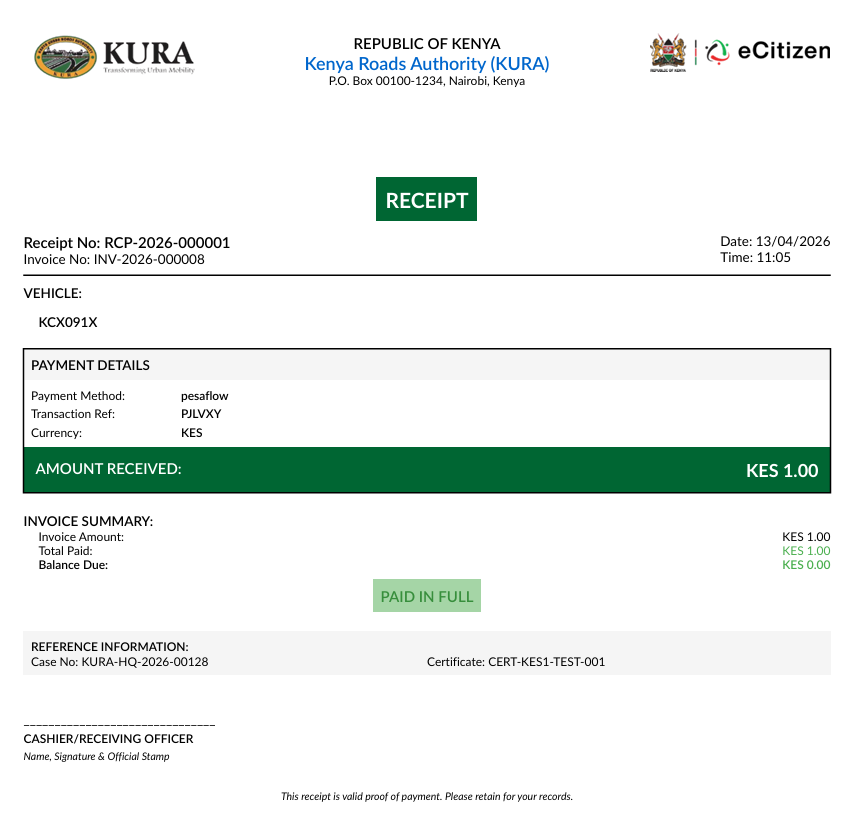
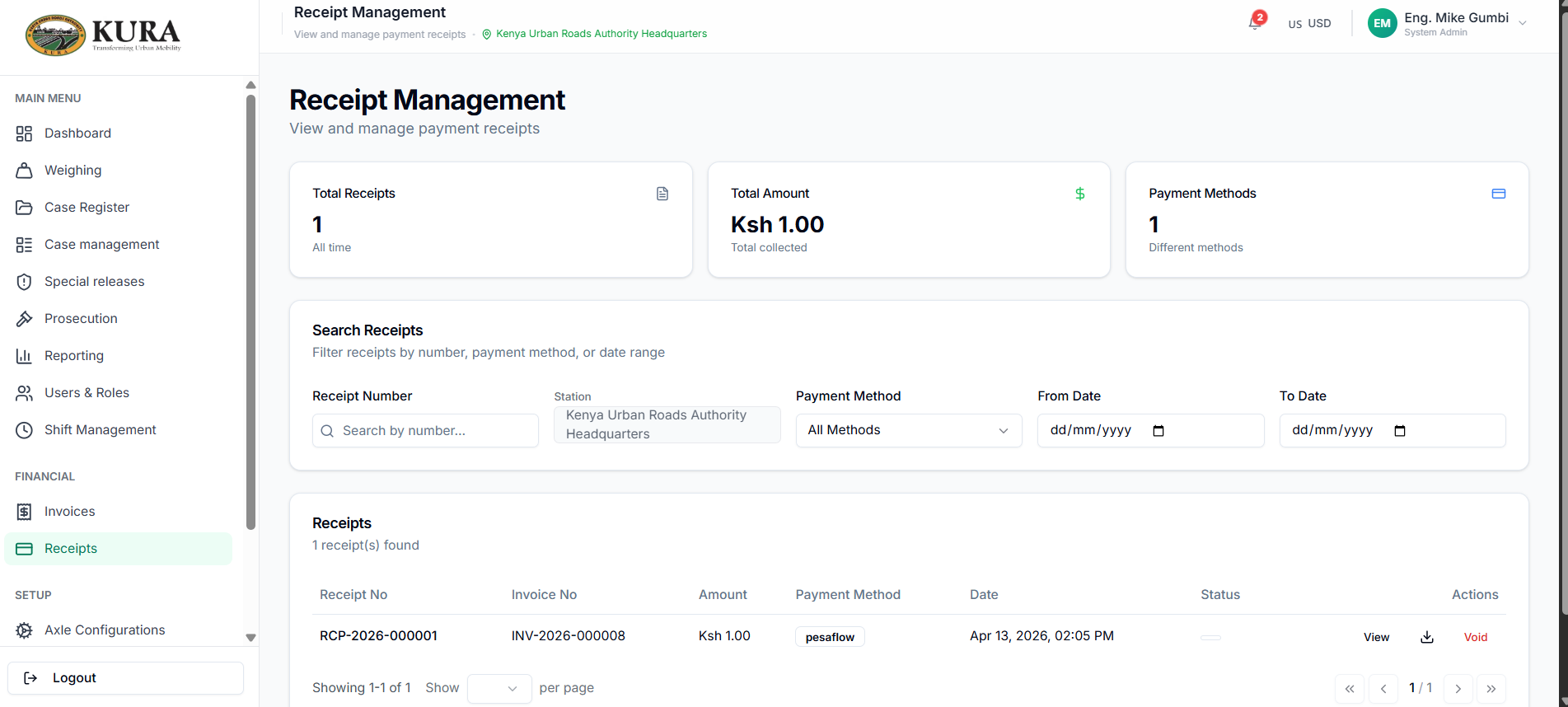
- Verify success and downstream receipt generation.
Joint liability — driver and owner charges
Under the Kenya Traffic Act Cap 403 and the EAC Vehicle Load Control Act, the registered owner and the driver are jointly and severally liable for overload offences. TruLoad reflects this in how charges are calculated and displayed.
How charges are calculated
The fee schedule (stored in AxleFeeSchedules) gives the per-party amount for each overload band:
| What | Formula |
|---|---|
| Per-party fee | Fee band lookup (overload kg × conviction number) |
| Total billed | Per-party fee × 2 (driver + owner) |
The prosecution DTO exposes both values:
| Field | Meaning |
|---|---|
perPartyFeeKes / perPartyFeeUsd |
Amount each party owes individually |
totalFeeKes / totalFeeUsd |
Combined liability (what appears on the invoice) |
Repeat offenders
A vehicle with a prior conviction within 12 months is treated as a second offence. TruLoad selects convictionNumber = 2 from the fee schedule, which encodes the increased rate (typically 2× the first-offence band under Cap 403). No additional multiplier is applied on top of the band — the fee schedule is the single source of truth.
Practical example
| Scenario | Per-party fee | Total billed |
|---|---|---|
| First offence, 5 000 kg GVW overload (Cap 403) | KES 5,000 | KES 10,000 |
| Second offence (within 12 months), same overload | KES 10,000 | KES 20,000 |
Payment and closure handoff
- Confirm payment success state.
- Confirm receipt record is created.
- Return to case flow for memo/reweigh/closure where required.